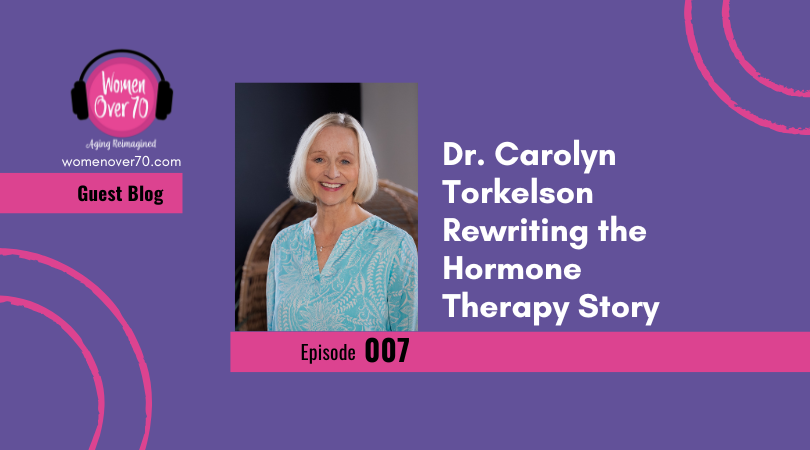
Contributing Writer: Dr. Carolyn Torkelson Rewriting the Hormone Therapy Story
After 30 years in clinical practice, Dr. Torkelson now writes and consults on women’s health issues, focusing on mature women.
I remember exactly where I was when hormone therapy suddenly fell out of favor. It was August 2002; I was sitting in a coffee shop with a friend when my Nokia phone rang. A local TV station wanted me to come on air immediately to talk about alternatives to hormone therapy. The Women’s Health Initiative (WHI) study had just been curtailed, and the message was already spreading: estrogen was dangerous, and women needed something else to ease the symptoms of menopause. Overnight, hormone therapy went from a standard of care to suspect.
But even then, many of us who practiced holistic women’s health were uneasy with the conclusions. The women in the WHI study were not typical perimenopausal women. Most were older, many already had health conditions, and they were far beyond the age when hormone therapy is usually started. It didn’t make sense to assume their risks were the same as those of healthy women just entering menopause.
So while I expanded my work with non-hormonal options, I did not abandon hormone therapy entirely. Like other careful practitioners, I continued to use it selectively—when the benefits clearly outweighed the risks. I asked a simple question then, and I still do: Why should women at low risk be denied relief from debilitating symptoms?
Now, more than twenty years later, the science is finally catching up with that question. Careful reanalysis of the evidence shows that estrogen does not increase breast cancer risk for most women. When hormone therapy is started within about ten years of the onset of perimenopause, it has been associated with important long-term benefits: fewer hot flashes and night sweats, no significant increase in heart disease for women ages 50–59, fewer bone fractures, and possible protection against cognitive decline. It has also been linked to a reduction in fatal cardiovascular events—the leading cause of death in women.
So significant is this shift that in November 2025, the FDA removed the black box warning from all estrogen products. For years, that label warned of increased risks of heart disease, stroke, breast cancer, and probable dementia. It is no longer there. There is one important exception: women who still have a uterus should not take estrogen without progesterone, because unopposed estrogen increases the risk of uterine cancer.
For many of us now in our 70s and beyond, this news brings complicated feelings. We made decisions based on what we were told at the time. Some of us were never offered hormon therapy at all. Others stopped abruptly. Many endured years of symptoms they assumed were simply the price of aging. This new evidence doesn’t change what we lived through. But it does change the story. It reminds us how quickly medical guidance can shift—and how important it is that women’s real lives and real bodies be reflected in research. It also restores something many women lost in 2002: the right to weigh risks and benefits for themselves.
I’ll be sharing more in the months ahead about what this evolving research means for menopausal and aging women. Because menopausal changes do not end with your last menstrual period – neither should the conversation.
Connect with Carolyn
Email: cimtork9@gmail.com
Website: http://womenagingwell.org
WO70 Podcast: episode #007
Carolyn is co-author, with Catherine Marienau, of Beyond Menopause: New Pathways to Holistic Healing (2023).
*Co-founder and former co-chair of the Minnesota Holistic Medical Group; founder and former medical director of Integrative Services, Women’s Health Clinic, University of Minnesota; adjunct professor, Dept. of Family Medicine and Community Health, University of Minnesota; Board member of We Care.