
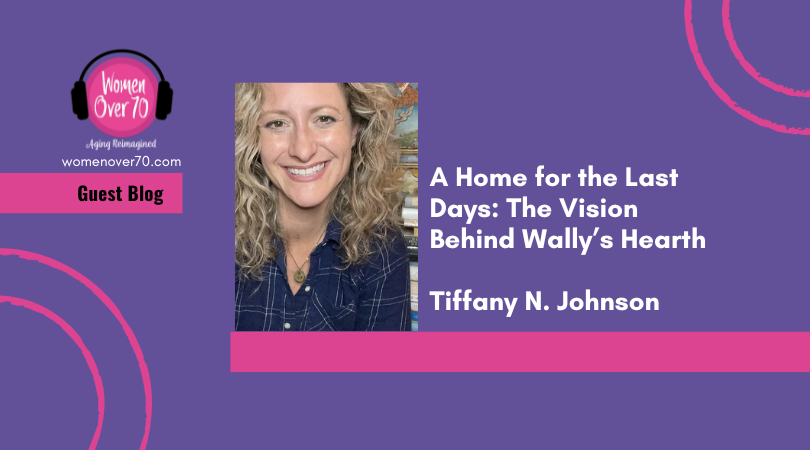
Contributing Writer: Tiffany N. Johnson is Executive Director and Co-Founder of Wally’s Hearth in the Chicago area.
Most of us have witnessed it, or longed for it: a good death is often less about “perfect” medical intervention and more about presence.
A hand held at 2 a.m. A familiar quilt. Someone making tea. A room where love can be quietly felt.
And yet, in our communities, too many people reach the end of life without that kind of steadiness. They may live alone. Their caregiver may be exhausted. Their family may be far away, complicated, or simply unable to provide round-the-clock care. Sometimes the need is bigger than what one household can hold.
That gap is why we are building Wally’s Hearth in Chicagoland: a small, home-like end-of-life residence grounded in the social-model hospice home approach.
The model is simple, but powerful. Hospice medical care remains provided by each person’s chosen hospice agency. Wally’s Hearth provides the home itself: a peaceful place to live, daily rhythms of comfort, shared meals, trained staff, volunteers, companionship, and practical support so no one has to navigate their final days alone or unsupported.
A social-model hospice home is not a hospital, and it is not meant to replace medical hospice care. It is a community-based layer of support around a person who is dying. It recognizes that while dying may include medical needs, it is also a deeply human experience. People need safety, tenderness, familiar routines, honest conversation, quiet, laughter, music, privacy, and the comfort of knowing someone is nearby.
In June, my co-founder, two board members, and I attended the Omega Home Network Conference in Santa Fe, where I spent time with people from across the country who are building and sustaining homes like this in their own communities. I came home even more convinced that Wally’s Hearth is not an abstract dream. It is part of a larger movement already taking root in other states and communities: ordinary people coming together to create places where dying people can be cared for with dignity, skill, and love.
We call it a hearth with purpose and intention. A hearth is a place where people gather, where stories are told, where warmth is shared without performance. It is also a symbol of legacy: a steady, reliable place of gathering we build so others can be held when we are no longer here to hold them ourselves.
Wally’s Hearth is named after two extraordinary men: my father, Wally, and my co-founder Dr. Lydia Manning’s dear friend Wally, whom I served as a death doula. Both men, in different ways, helped shape the spirit of this work.
I am an end-of-life caregiver, educator, and ceremonialist. My work has taught me that end-of-life care is not only a medical event; it is a sacred community moment. When done well, it can soften grief, strengthen families, and remind us what matters. It can also be a practical act of justice: everyone deserves dignity and tenderness, not only those with large homes, large families, or abundant resources.
Wally’s Hearth is being built from that belief. We are imagining a place where people can be accompanied with compassion, where caregivers can exhale, where volunteers can bring their gifts, and where the final chapter of life is met not with fear or isolation, but with warmth, dignity, and belonging.
— Tiffany N. Johnson
Tiffany N. Johnson is a death doula, dementia death doula, and educator specializing in end-of-life care, caregiving support, and meaningful ritual. She works with individuals and families navigating serious illness and dying, in collaboration with home healthcare, medical, and hospice teams. She leads the Oak Park End-of-Life Options Coalition.
https://www.wetooshallpass.com