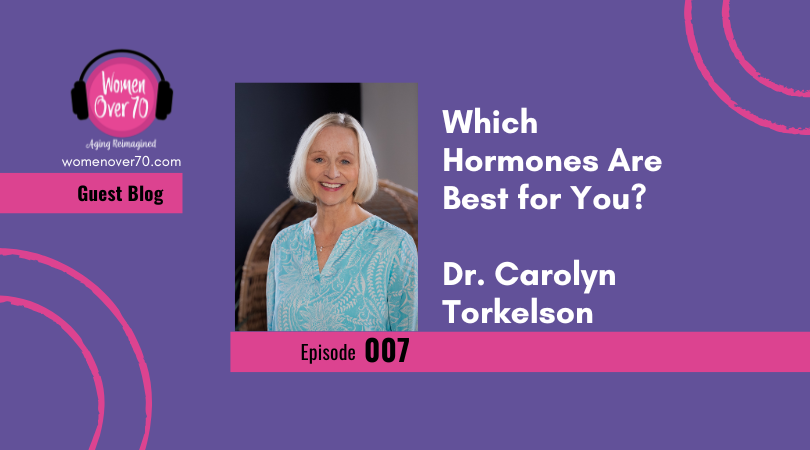
Contributing Writer: Dr. Carolyn Torkelson – Which Hormones Are Best for You? After 30 years in clinical practice, Dr. Torkelson now writes and consults on women’s health issues, focusing on mature women.
If you’re considering hormone therapy, you’re not alone. Many women ask: Which hormones should I take? Is it too late to start? What’s the safest option for me now?
These are thoughtful and important questions—especially as we age and take an active role in advocating for our health.
Based on current research and my clinical experience, many menopause specialists recommend estradiol combined with micronized progesterone. These are often referred to as bioidentical hormones because they are chemically identical to the hormones your body naturally produces. They are FDA-approved and available by prescription.
A Brief Look Back
Hormone therapy has been available since the 1940s, when Premarin—one of the first estrogen therapies—was introduced. (Yes, it was derived from the urine of pregnant mares.) Premarin contains a mixture of estrogens and was widely used until oral estradiol (E2) became available in the 1960s and 1970s.
If you still have your uterus, it is not considered safe to take estrogen alone. Progesterone must be added to protect the uterine lining and reduce the risk of endometrial cancer.
For many years, the most commonly prescribed progesterone was a synthetic form called medroxyprogesterone acetate (MPA), also known as Provera. A combination of synthetic estrogen and MPA was used in the large Women’s Health Initiative study. When early results were released, many women stopped hormone therapy. Later analyses showed that outcomes varied depending on the type of hormones used and the age at which therapy was started.
Why Many Clinicians Prefer Bioidentical Hormones
Over time, many practitioners—including myself—have shifted toward prescribing bioidentical hormones. These hormones begin as plant-derived compounds (typically from soy or wild yam) and are then chemically converted in a laboratory to match the exact molecular structure of hormones produced by the human body.
Research suggests that natural progesterone may be associated with a lower risk of breast cancer compared with synthetic progestins such as MPA, which may carry a higher risk.
Patches vs. Pills: Why the Delivery Method Matters
How you take estrogen can be just as important as which hormone you choose.
In my practice, I often recommend starting with a transdermal estrogen patch. The patch delivers estradiol steadily through the skin directly into the bloodstream, bypassing the liver. This method is associated with a lower risk of blood clots and fewer liver-related side effects compared with oral estrogen.
There are multiple patch brands and dosing options available, allowing treatment to be individualized based on your symptoms, medical history, and insurance coverage.
That said, while the patch is often my first choice, oral estrogen remains a reasonable option for women who prefer pills or who cannot tolerate the patch.
Recently, a patient asked me, “How long do I need to stay on these hormones?”That’s an excellent question—and one I’ll explore in a future blog post.
A Final Thought
There is no one-size-fits-all approach to hormone therapy—especially later in life. The best decision is one made in partnership with a knowledgeable healthcare provider who understands your goals, medical history, and stage of life. Aging is not a medical problem to be fixed. It is a natural life stage that deserves good information.
Connect with Carolyn
Email: cimtork9@gmail.com
Website: http://womenagingwell.org
WO70 Podcast: episode #007
Carolyn is co-author, with Catherine Marienau, of Beyond Menopause: New Pathways to Holistic Healing (2023).
*Co-founder and former co-chair of the Minnesota Holistic Medical Group; founder and former medical director of Integrative Services, Women’s Health Clinic, University of Minnesota; adjunct professor, Dept. of Family Medicine and Community Health, University of Minnesota; Board member of We Care.