
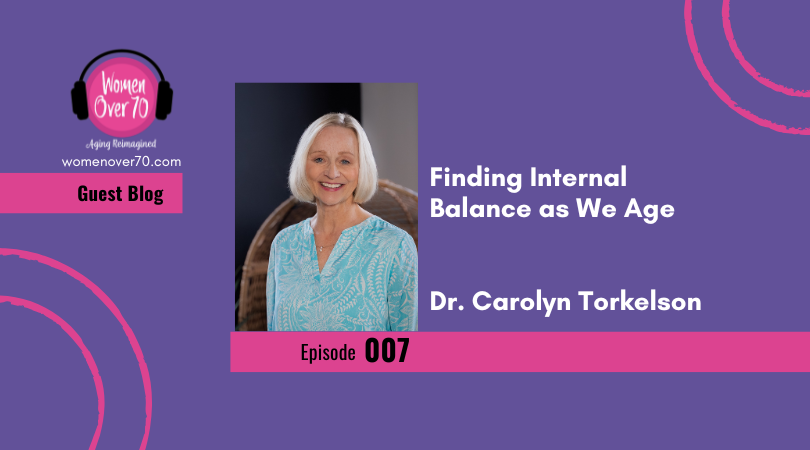
Contributing Writer: Carolyn Torkelson, M.D. (Ep. 007#) After 30 years in clinical practice, Dr. Torkelson now writes and consults on women’s health issues, focusing on mature women.
Finding Internal Balance as We Age
As the body moves through perimenopause and the menopause transition, it gradually loses some of the hormonal buffering that provided stability for decades. In the postmenopausal years, maintaining internal balance often requires developing new supportive systems—especially as life continues to shift and evolve in consequential ways.
If you’ve spent any time on social media, you’ve likely seen endless promises of supplements, detoxes, cleanses, and quick fixes that claim to restore balance overnight. But as we age, we need to find sustainable, realistic approaches to maintaining balance and well-being.
One factor that can affect our well-being is chronic stressors that impact our daily life as we age. While some stressors may lessen over time, new challenges—such as caregiving responsibilities, health concerns, family dynamics, and financial pressures—can feel overwhelming. The goal isn’t to eliminate stress entirely, which isn’t realistic, but to strengthen our ability to respond to it with resilience and balance.
Over years in medical practice—and in the book Beyond Menopause: New Pathways to Holistic Health, which I co-authored with Catherine Marienau—we emphasize that creating a stable foundation through the integration of the Five Pillars of Health is one of the most effective ways to support lasting balance and well-being.
The Five Pillars of Health
Building that foundation doesn’t require extreme measures. It comes down to consistently supporting five essential areas of well-being. You can choose any pillar to focus on, since working on one will naturally influence the others.
- Rest & Restoration
Getting quality sleep is a non-negotiable pillar of overall health and well-being. Prioritizing consistent, restorative sleep gives the body the time it needs to repair tissues, support immune function, and regulate essential hormones that influence everything from appetite to stress. During deep sleep, the brain also processes information, consolidates memories, and clears metabolic waste, helping maintain cognitive clarity for a healthy brain.
- Nutrition & Digestion
It’s not just what you eat—but how and when you eat. Slowing down, being present with your meals, and tuning into your body’s hunger and fullness cues can make a meaningful difference in how you feel. Supporting digestion through simple habits—like eating in a calm environment, chewing thoroughly, and allowing time between meals—helps your body better absorb and use nutrients. This is called “Mindful Eating.” When you pair these practices with choosing nourishing, whole foods, you create a steady foundation for balanced energy, improved mood, and overall well-being.
- Movement & Exercise
Movement doesn’t have to be intense to be enjoyed and effective. In fact, some of the most sustainable and beneficial forms of exercise are gentle, accessible, and even relaxing. Activities like walking, stretching, yoga, dancing around your living room, or practicing mindful breathing all contribute to your physical and mental well-being. These forms of movement improve circulation, support joint health, reduce stress, and help maintain flexibility and balance without putting excessive strain on your body.
- Connection & Community
We’re not meant to age alone—we’re social beings whose habits, moods, and motivation are shaped by the people around us. When you step into a shared space—a walking group, a fitness class, a book club, or any welcoming community—you’re no longer relying solely on internal drive; you’re creating an environment that supports you and offers a sense of belonging.
- Emotional Health & Resilience
Caring for your emotional well-being is just as important as physical health. Developing tools to process stress, regulate emotions, and build resilience creates lasting stability. As we grow older, we often find ourselves caring for those we love, and in doing so, we learn that resilience is more than endurance—it is the quiet strength to navigate grief, adapt to change, hold space for others, and still tend to our own well-being.
Bringing It All Together
These pillars aren’t about perfection—they’re about a sustainable foundation for long-term health and wellbeing. Together, they help create a resilient internal environment that supports your physically, emotionally, and spiritual wellbeing. A life balance that supports you as you age.